
The proper mechanics of sitting with input from SPROGA® Founder Dan Gottlieb @sproga_
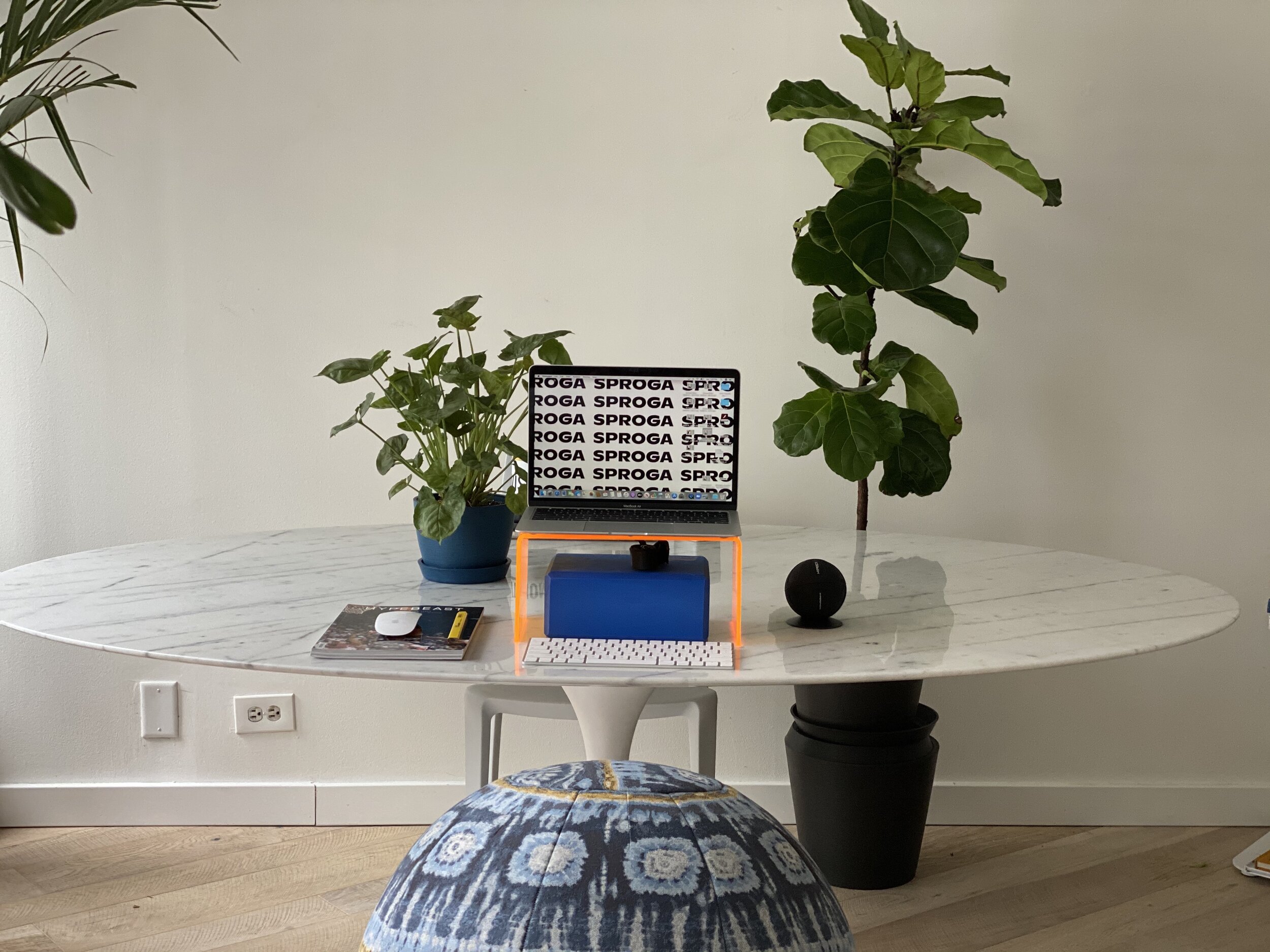
Become more mindful about how you sit, and you’ll reap the benefits in your health and your work productivity. Our overarching philosophy at Venn is more movement, less sedentarism, and that means we believe sitting should never be stagnant: Move, bend, stretch, roll, stand up, balance, move around and LIFT!
That last one - LIFT- is especially important for a seated posture. It’s the reason why we designed Venn chairs: to teach you how to lift and to make your whole body aware of gravity, the force that shapes our entire reality.
Introducing a Venn Chair into your office or living space is one way to become more active while you’re sitting and to become less sedentary, but it can also be helpful to think about the mechanics of sitting.
With some input from our expert ergonomist Daniel Gottlieb (@sproga_), a Certified Posture Specialist, we’ve mapped out a guide to thinking about movement and positioning in each area of the body while you sit on your Venn Chair. Read on to learn!

1. Feet and Ankles
As the foundation of human posture, the feet are the most important place to begin an assessment of sitting posture and mechanics. Foot position and foot/ankle mechanics are directly correlated to a very common problem for desk workers - low back pain. Low back pain is very often the result of joint dysfunction or muscle imbalance issues in this area. A disparity at the foot and ankle will throw off all the postural muscles throughout the rest of the body.
Recommended movements: To start, remove your shoes when you’re going to be seated for an extended period. You can do many more movements with bare feet, such as tucking your toes underneath you with your legs on both sides of a Venn. Most people have massive flexibility issues in their feet and ankles. You can work on this while you sit by moving your foot and changing their position often - bending, flexing, tucking and pressing your feet as you sit are all encouraged.
Yoga Dan’s Recommendation: I recommend using a half foam roller to get great range of motion, as well as stability of the joints. Both sides of the roller can be utilized to achieve this affect.
2. Hips
The next area of sitting posture assessment is the hips. The pelvis should be in a neutral position or in a slight degree of forward tilt. You can avoid sitting with a rotated pelvis by positioning your knees at an equal distance.
Recommended movements: Rotate, Bounce, roll, change your leg and feet positions, and the whole time, focus on the LIFT!!

Yoga Dan’s Recommendation: Active sitting on a Venn Chair helps keep hips at a right angle. This will then provide proper feedback to nuatate or position the pelvis forwards and backwards playing always back to the center.
3. Spine
To properly position your spine when you sit, review the importance of hip position first. pubic bone, naval and sternum are aimed directly in front of you, while you keep your butt behind you. recognize that your spine has three general front-to-back curves.
Recommended movements: Twist left and right, reach up and bend left and right. One move we love for moving the spine is roll and lay back on your Venn Chair. Try to touch the floor behind you with your palms, or take any variation of that - take some cues from these Venn super movers!
Yoga Dan’s Recommendation: To keep the spine in a neutral position, keep your shoulders back and down, vision forward (meaning keep you eyes on the horizon not the stars or the soil) and your lower back supported. Doing stick mobility work can help you recognize and become more aware of your spine’s natural curvatures - watch this video to help with visualization of spinal alignment and learn about stick mobility work.
4. Head
Head posture is the last piece of sitting mechanics but so important to get right. Unnecessary pressure on the cervical spine increases the risk of spinal degeneration over time. Your workstation equipment should be arranged in such a way that encourages you to keep your head aligned over your shoulders.
Computer monitor. Raise it to a level where your eyes hit the top third of the screen when you look straight ahead.
Mouse and keyboard. Position them so that when you use them your forearms are parallel to the floor and your elbows are bent approximately 90 degrees.
Recommended movements: You can keep your cervical spine moving as you sit with short breaks to twist your head from side to side, but you can also stretch and strengthen this area with moves like these:
Yoga Dan’s Recommendation: Keep your desk within arms reach so not to overextend your neck. Make sure your note pad is on the side you write with. If you don’t have a Bluetooth for your phone make sure you use headphones so you don’t unnecessarily strain your neck muscles in an awkward position. Keep a plant on your desk and try to position your desk to receive as much natural sunlight as you can. Finally, remember to drink plenty of water and for every hour you are at your desk take at least 3-5 minute bite breaks throughout the hour.

Dan Gottlieb aka Yoga Dan is Certified in Applied Functional Science. Certified Posture Specialist. OSHA® Certified ergonomist, the founder of SPROGA®, and an international yoga teacher based in NYC. He’s worked with companies like WeWork, Cureatr, Peloton and, Linkedin to optimize their work stations, and has provided instruction to NBA, NFL, NHL, and Gold Medal Olympic Athletes. Follow him on Instagram at @sproga_